
A Future Defined by Growth and Redemption
The Restoration of Life is a nonprofit foundation dedicated to championing the sacred value of every life. We transform the trauma of incarceration into a powerful catalyst for personal rebirth, community healing, and systemic change. Join us to build a future where we choose to see the changes made while restoring one self.


A Story of Becoming: My Life, My Time, My Transformation In 2013, I entered prison with a 25‑to‑life sentence. I was a young man who had made a horrific mistake — one that changed lives, including my own. From the moment those doors closed behind me, I made a decision that the worst thing I had ever done would not be the definition of who I was or who I would become. I refused to let that moment be the final chapter of my life. The years that followed became a test of character, discipline, and purpose. I committed myself to rebuilding from the inside out. I didn’t wait for someone to save me or tell me what to do — I took every opportunity available to grow, learn, and confront the parts of myself that needed healing. Over the last thirteen years, I have completed every rehabilitation program offered to me: substance abuse treatment, anger management, trauma healing, victims impact, and the Fatherhood Foundation. These programs forced me to face my past honestly and taught me how to build a future rooted in accountability, emotional maturity, and empathy. I didn’t just attend these classes — I lived them. I applied for them. I let them reshape me. Education became another pillar of my transformation. I earned a college degree in welding through KCKCC, proving to myself that I could build something real, something useful, something honest. I also worked for the same private industry job for over eight years, showing consistency, reliability, and commitment. That job taught me responsibility, teamwork, and pride in doing things the right way. But the most important part of my journey has been becoming a better father. Even from behind these walls, I refused to let distance turn into absence. I stayed involved in my son’s life in every way I could — through regular conversations, visits, guidance, and financial support. I learned how to parent with intention, patience, and love. I learned how to be present even when physically separated. My son has been my motivation, my anchor, and my reminder of the man I strive to be. And through all of this, I found something I never expected: love. I met an incredible woman who has stood by me, believed in me, and supported my growth. We are engaged to be married, and she is part of the strong support system that surrounds me today. Her presence in my life is proof that redemption is real, that people can change, and that love can grow even in the hardest places. Thirteen years ago, I walked into prison broken, lost, and carrying the weight of a terrible mistake. Today, I stand as a better man, a better father, and a better human being. My story is not one of excuses — it is one of accountability, transformation, and hope. I have spent every day working to become someone worthy of a second chance, someone who contributes instead of harms, someone who leads with integrity and compassion. This is not the end of my story. It is the beginning of the life I’ve built through discipline, humility, and unwavering dedication to change. — Kyle A Carter
Kyle Carter
Stories of Growth

A Society where past mistakes do not define future potential. Where barriers to re-entry are replaced with opportunities, where restored individuals lead the way in building safer, more equitable communities.

Chris Allison
Decades Gone By For more than three decades, I have watched life continue without me. During my incarceration, my father passed away. My grandmother died. Nearly all of my aunts and uncles are gone. I was unable to stand beside my family at their funerals, embrace the people I loved one final time, or grieve alongside those who knew them best. My children grew into adulthood while I remained behind prison walls. They built lives of their own, married, and became parents. Grandchildren were born whom I have never held in my arms. I have missed birthdays, graduations, weddings, births, funerals, holidays, and thousands of ordinary moments that most people rarely think about until they are gone. Time is one of the few things in life that can never be restored. I cannot recover those years, and I cannot undo the choices that brought me here. At twenty-two years old, I was immature, reckless, angry, ignorant, and unprepared for adulthood. I lacked discipline, education, emotional control, and the ability to think beyond the moment in front of me. I came from an environment filled with negative influences and developed destructive patterns of thinking and behavior. None of that excuses the harm I caused. I accept responsibility for my actions completely and without qualification. But there is another question society must eventually confront: Can a human being become something more than the worst thing he has ever done? I believe the answer must be yes. If people are incapable of meaningful change, then rehabilitation is little more than a word we place on prison walls. If education, accountability, maturity, remorse, and decades of demonstrated growth can never matter, then we must ask what the purpose of a correctional system truly is. During my incarceration, I made a decision that I would not allow the worst choices of my youth to define the entirety of my life. I chose education instead of bitterness. I became a certified paralegal through Blackstone School of Law. When educational opportunities became available through prison tablets, I completed course after course. As additional college opportunities became accessible, I began pursuing an associate degree with the goal of eventually earning a bachelor's degree. I did not pursue education for recognition. I pursued it because I eventually understood that ignorance had limited my choices and contributed to the destruction I created around me. I no longer wanted to be someone who destroyed things. I wanted to become someone who built them. Over the years, I married a remarkable woman who challenges and inspires me to continue becoming a better man. Together, we have built a small and growing business that provides seasonal employment and continues expanding. Under the names of Kris Allison and W. S. Hurst, we have written books together on historical fiction, Norse history, mythology, philosophy, and personal development. Our most meaningful project is Steadfast, a recovery-oriented program designed to help people struggling with addiction develop stability, accountability, discipline, self-reliance, and purpose. That work is deeply personal to me. I understand what can happen when a young person lacks direction, wisdom, education, and self-control. I know what destructive thinking looks like because I lived it. I also know that people can change because I have spent more than thirty years attempting to do exactly that. Prison reform should never mean forgetting victims or pretending serious crimes did not occur. Justice matters. Accountability matters. Public safety matters. But justice and redemption do not have to be enemies. There should also be room in our correctional system to recognize genuine transformation. A twenty-two-year-old man and a fifty-six-year-old man can occupy the same body while being profoundly different human beings. Decades of aging, education, loss, reflection, responsibility, and rehabilitation can change how a person thinks, how they respond to conflict, what they value, and what they hope to contribute to the world. Not everyone will change. But some do. For those who have spent decades demonstrating responsibility, pursuing education, mentoring others, building skills, maintaining meaningful family relationships, and preparing to contribute positively to society, there should be meaningful ways for that transformation to matter. I cannot change the past. I cannot return to my children's childhoods, attend the funerals I missed, or hold the family members who died while I was incarcerated. What I can do is determine what kind of man I will be today. Today, I am a husband, writer, student, mentor, business owner, and grandfather. I am a man who has spent decades trying to create value where I once created destruction. Whether I remain incarcerated or return to society, I will continue trying to be useful. But I also believe our communities gain something when a correctional system is willing to recognize real rehabilitation. A society must protect itself from people who remain dangerous. A just society should also possess the wisdom to recognize when people have genuinely changed. Prison reform is not about forgetting the past. It is about accepting that, while the past can never be rewritten, human beings should still have the opportunity to write a different ending. — Chris Allison







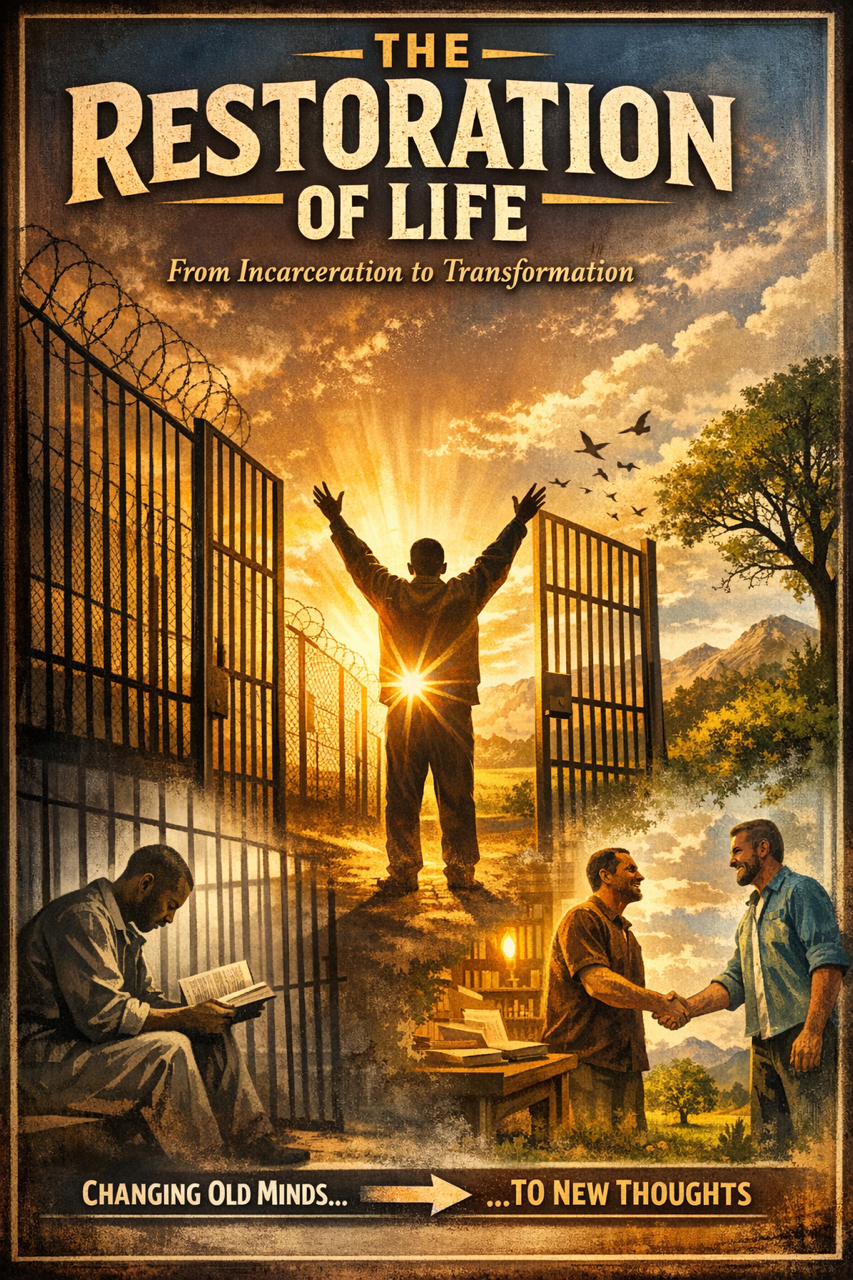


Choosing a path of healing and compassion by breaking the heavy cycle of trauma and pain.
- For a long time, I carried heavy bitterness about the sentence my assailants received. The weight of that anger only added to my trauma until I realized that hurt people simply hurt people. I didn’t want to stay trapped in that cycle of pain or wish more hurt on others. Instead I choose to turn my experience into better thinking, focusing on hope and healing rather than revenge. I believe in redemption because I know that a future built on compassion is stronger than one built on resentment. I stand not only as victim, but as a survivor. I refuse to let the violence committed against me define my entire life. Instead I choose compassion over bitterness, understanding over hatred, and healing over revenge.
- D. Sheppard Executive Director (Founder)

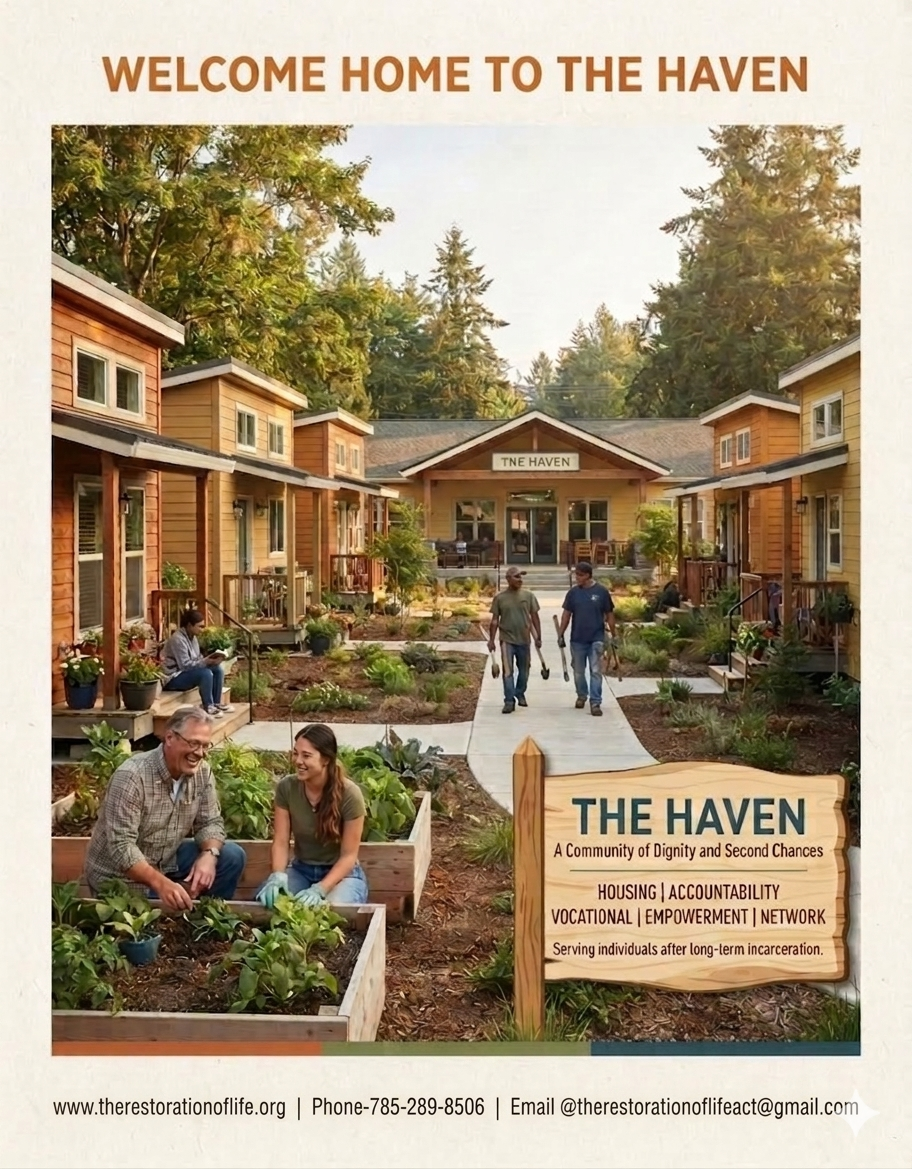
The Haven is a structured residential reentry initiative program that bridges the gap between incarceration and community reintegration providing highly supervised goal oriented housing coupled with intensive behavioral and occupational support. This type of housing is designed to support justice involved individuals through specific court programs like (The Restoration of Life)
The Haven Housing peer supporKansas sentence review legislation and The Haven housing peer support
Mission Statement
The Haven
Fosters a safe unified community that protects, the vulnerable, amplifies individual potential, and creates lasting resilience through the power of shared guidance and
Proverbs 27:17
Iron sharpens iron, and one man sharpens another.